In the United States, the 1960s were a time of incredible cultural expansion and expression. This was no less true for the men and women serving in Vietnam. Soldiers caught in the mixture of monotony and chaos looked for any way to express themselves and their sentiments. For many, their helmets made a convenient creative outlet.
Helmet graffiti persisted throughout the War. While technically, soldiers were not allowed to decorate their gear, most commanding officers allowed some individuality as long as it did not reflect badly upon the unit or branch. However, while commanding officers allowed some leniency regarding graffiti, men were still instructed to stay away from photographers and journalists. As the War drug on some of the designs began to develop anti-war sentiments, whether consciously or subconsciously.
Below are examples of common helmet graffiti designs.
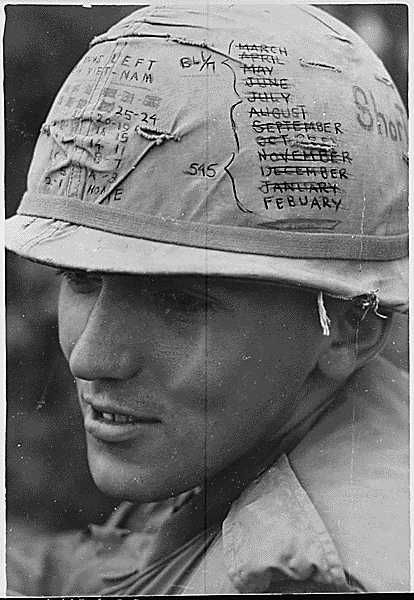
Description: A soldier from the 1st Cavalry Division wearing his helmet featuring a calendar marking off the passing months until the end of his time in Vietnam. This photo was taken in 1968 during Operation Pershing
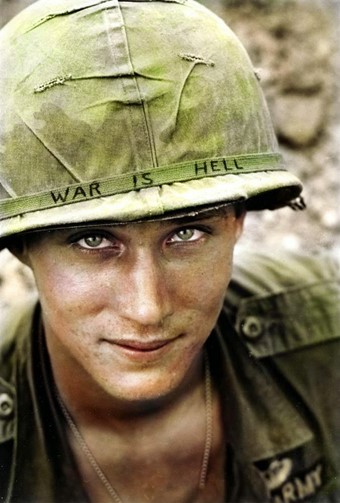
Description: Taken in June of 1965 by Associated Press photographer Horst Faas, this photo shows Larry Chaffin of the 173rd Airborn Brigade with his helmet reading “War is hell” Chaffin was 19 years old at the time of the photo. Chaffin survived the war and returned home
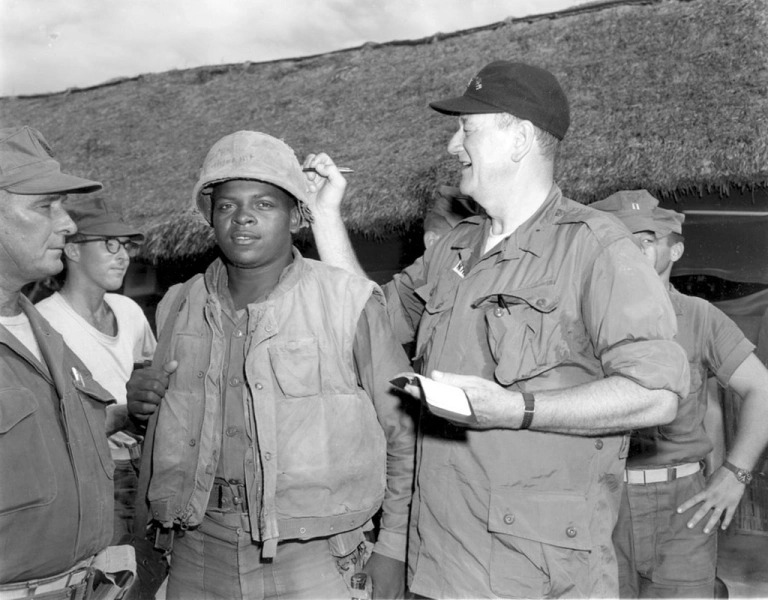
Description: Actor John Wayne signing Marine helmets in 1966

Description: Soldier in the 3rd Marines with graffiti/art on both his helmet and flack jacket. The flack jacket reads “Caution: Vietnam may be hazardous to your health!” The helmet reads “Just you and me, Right, Lord?”
To the left, you can find a brief animated video describing the use and significance of helmet art during the Vietnam War.
